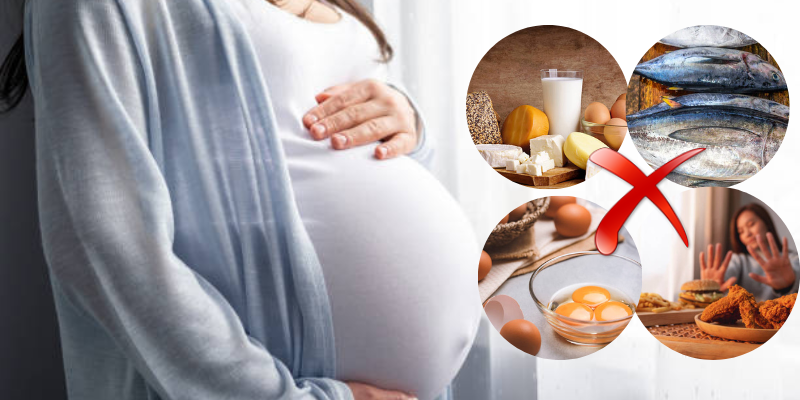
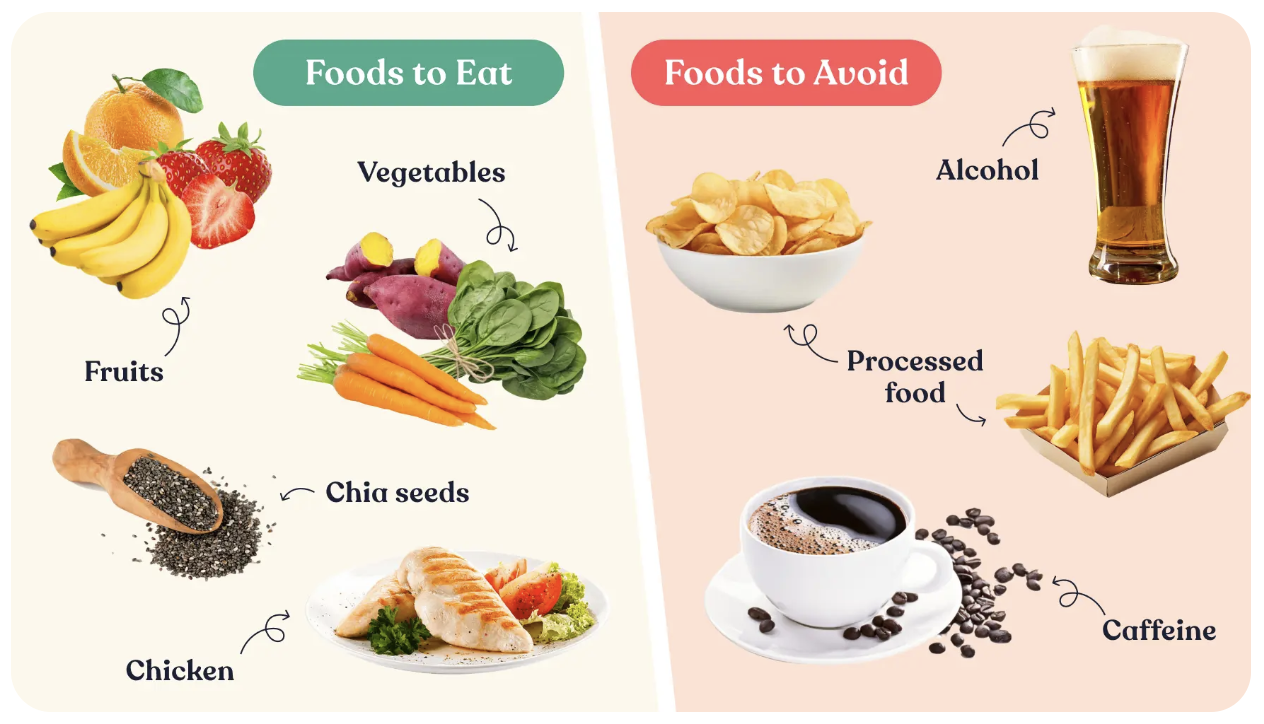
To avoid complications during pregnancy, Costa recommends avoiding certain foods and substances. The list includes:
Processed foods. It’s no secret that processed foods are high in sodium, added sugars, and saturated fats. They are also low in minerals, vitamins, and dietary fiber. During pregnancy, these foods can increase the risk of pregnancy-related issues like GDM or gestational diabetes mellitus and can cause inflammation.
Foods with a high mercury content, namely, certain seafood. Tuna (including canned tuna), tilefish, swordfish, king mackerel, and marlin all contain mercury, which can affect your developing child’s nervous system and brain.
Raw and undercooked animal products are to be avoided for the sake of your health and the health of your child. Eating undercooked or uncooked eggs, poultry, fish, meat, and shellfish can cause illnesses such as toxoplasmosis, listeriosis, and salmonellosis.
Mold-ripened soft cheeses can contain listeria bacteria which can penetrate the placenta and cause health complications in babies or pregnancy loss. Therefore, it’s best to avoid cheese such as camembert, brie, and blue cheese.
It’s also best not to eat raw sprouts because they have been known to contain bacteria such as E. coli and salmonella. Only eat mung beans, radish, alfalfa, and even broccoli sprouts when thoroughly cooked.
Alcohol can pass through the umbilical cord during pregnancy and lead to fetal alcohol spectrum disorders. So, all forms of alcohol must be avoided when you’re pregnant.
And last, but not the least, caffeine. As hard as it is, most women know that it’s not recommended to drink caffeine when pregnant because even as little as 200 milligrams can impact fetal development.
It’s not just coffee that you need to avoid, but also energy drinks and bars, tea, chocolates, and certain flu, cold and pain medication. Consult your doctor on medications that are safe to take while pregnant.
While this list is meant to give you direction, everyone’s tolerance levels and dietary requirements are different. Consult your doctor or work with a registered dietician to create a personalized pregnancy diet plan that is safe for you.